


Table of Contents
Introduction
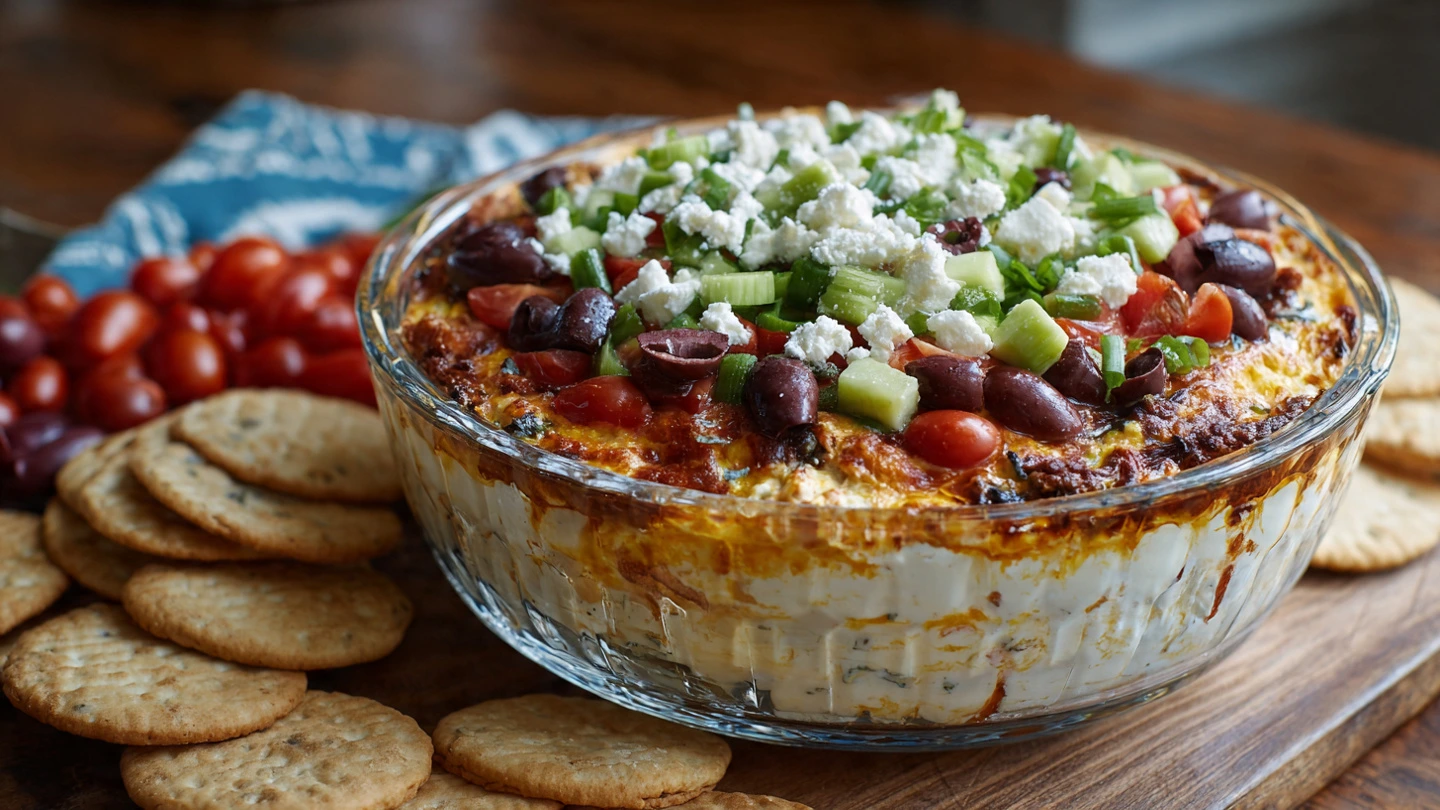
Imagine a dip so vibrant, so packed with fresh flavors, it transports you straight to a sun-drenched Greek island
. Picture layers of silky-smooth hummus, cool tzatziki, savory herbs, and crisp, fresh vegetables, all coming together in one perfect scoop
. This isn’t your average party appetizer; this is the Ultimate Greek Seven Layer Dip, a refreshing and wholesome twist on a classic favorite
. It’s the perfect centerpiece for any gathering, a healthy and satisfying snack, and a delicious journey into the heart of Mediterranean cuisine
. This article is designed to give you the best experience, whether you love the story behind the food or just want to get straight to the cooking
For years, the classic seven-layer dip has been a staple of potlucks and game days, typically featuring layers of beans, guacamole, and sour cream
. But what if we took that brilliant concept and reimagined it with the bright, zesty flavors of Greece?
The result is a dip that is both familiar and excitingly new. We swap refried beans for a creamy hummus base and trade the sour cream for a tangy, garlic-infused yogurt sauce
. The heavy cheddar is replaced with the salty tang of feta, and the toppings become a celebration of fresh Mediterranean produce
. I first had a version of this dip at a friend’s summer barbecue, and I watched it disappear in minutes
. I knew I had to recreate it, and after a few attempts to get the layers just right, I landed on this perfect, crowd-pleasing recipe that I’m excited to share with you
This article will guide you through everything you need to know to create this show-stopping appetizer
. We’ll explore the fascinating history behind the dish, take a deep dive into each of the seven glorious layers, provide a detailed, step-by-step recipe, and share essential tips and variations to ensure your dip is a resounding success
A Culinary History: From Tex-Mex Parties to Mediterranean Tables
While our dip sings with Greek flavors, the concept of a layered dip has a more modern, American origin
. The classic seven-layer dip, with its Tex-Mex roots, became a party phenomenon in the 1970s and 80s during a period of expanding culinary curiosity in the United States
. The first widely published recipe is credited to Family Circle magazine in 1981, though its popularity in Texas predates this publication
. This layered format proved to be a canvas for culinary creativity, evolving beyond its original form into countless variations, including this Greek-inspired masterpiece
This recipe is a beautiful fusion of a modern American concept with ingredients steeped in ancient history
. Two of its key components, feta and tzatziki, have stories that stretch back centuries.
- The Ancient Roots of Feta: The history of feta cheese is deeply woven into the fabric of Greece, with origins that can be traced back thousands of years . Some consider the cheese made from sheep’s milk described in Homer’s Odyssey to be an early ancestor of modern feta . Traditionally crafted by peasants from sheep’s milk (and sometimes goat’s milk), feta has long been an integral part of the Greek diet and culture . Its cultural significance is so profound that in 2002, it was granted “Protected Designation of Origin” (P.D.O.) status by the European Union, meaning only cheese produced in specific regions of Greece using traditional methods can legally be called “feta” . The name itself, which means “slice” in Italian, was adopted in the 17th century, highlighting a long history of cultural exchange .
- Tzatziki’s Tangy Tale: The story of tzatziki is a journey across empires . Its origins are intertwined with the Ottoman Empire, where yogurt and garlic condiments were a staple of the meze tradition . The name “tzatziki” is believed to derive from the Turkish word “cacık,” a similar cucumber and yogurt dish . Many food historians link its lineage back to the Indian raita, a yogurt-based side dish that traveled westward through the Persian Empire . The Greeks embraced and adapted this concept, creating their own distinct version with thick, strained yogurt and fresh dill, resulting in the cool, tangy sauce we know and love today .
The Anatomy of a Perfect Greek Dip: A Deep Dive into the Seven Layers
The magic of this dip lies in the careful orchestration of its layers
. Each component is delicious on its own, but when combined, they create a symphony of textures and flavors that is truly irresistible
. Let’s break down each of the seven essential layers
Layer 1: The Creamy Foundation – Hummus
Every great structure needs a solid foundation, and for our Greek dip, that foundation is hummus
. This creamy, savory spread provides a rich, earthy base that anchors all the other flavors
. While you can use store-bought hummus, taking the time to make it at home allows you to achieve a silky, whipped texture that is truly next-level
. The secret lies in a bit of kitchen science:
- The Baking Soda Trick: Simmering canned chickpeas with a pinch of baking soda raises the water’s pH, which helps break down the pectin in the chickpea skins . This makes them incredibly tender and allows them to blend into a perfectly smooth puree without the tedious task of peeling .
- Temperature is Key: For the smoothest texture, blend the chickpeas while they are still warm . Then, with the food processor running, stream in ice-cold water . This creates a lighter, fluffier emulsion and prevents the tahini from becoming grainy, resulting in a whippier texture .
- Choosing Your Oil: For blending into the hummus, a milder, more buttery extra virgin olive oil works best so it doesn’t overpower the other ingredients .
Layer 2: The Cool & Tangy Heart – Tzatziki
Floating atop the hummus is a cool, refreshing layer of tzatziki
. This classic Greek sauce provides a tangy counterpoint to the rich hummus
. The key to perfect tzatziki is twofold:
- Moisture Control: You must remove the excess water from the cucumber . Grating, salting, and squeezing the cucumber dry is a non-negotiable step to prevent a watery dip .
- Yogurt Choice: The fat content of your yogurt matters . For the richest, creamiest, and most satisfying mouthfeel, use a full-fat Greek yogurt (around 5% or 10% milk fat) . It provides a superior base for the other flavors compared to non-fat versions .
Layer 3: The Savory & Hearty Center – Seasoned Chicken or Chickpeas
This is the layer that adds a satisfying, savory depth and makes the dip more substantial
. For a heartier, non-vegetarian option, seasoned ground chicken is an excellent choice
. Cooked with a blend of classic Greek spices like oregano, garlic powder, and onion powder, it adds a wonderfully robust flavor
. For a delicious and equally satisfying vegetarian version, spiced chickpeas are the way to go . Simply toss a can of rinsed chickpeas with olive oil and the same Greek seasoning blend
. This not only provides a great texture but also aligns perfectly with the dip’s Mediterranean roots
Layer 4: The Fresh Garden Crunch – The “Greek Salad” Medley
Here, we bring in the vibrant crunch and freshness of a classic Greek salad
. This layer is a colorful medley of finely chopped vegetables that adds a crisp texture to every bite
. Essential components include crisp cucumbers, juicy tomatoes, and sharp red onion
. To ensure your dip stays fresh and doesn’t become soggy, use Roma tomatoes, as they have less moisture, and be sure to seed them before chopping
. For the cucumbers in this layer, English or Persian varieties are ideal as they have thinner skin and fewer seeds
Layer 5: The Briny Bite – Kalamata Olives
No Greek-inspired dish would be complete without the distinctive flavor of Kalamata olives
. Their rich, briny, and slightly fruity taste adds a necessary punch of saltiness that cuts through the creaminess of the base layers
. When selecting them, look for markers of quality to ensure an authentic taste:
- Authenticity: True Kalamata olives come from the Peloponnese region of Greece and often carry a Protected Designation of Origin (PDO) label .
- Appearance: They should be almond-shaped with a deep, uniform purple color, not an artificial-looking black . High-quality olives will appear plump, shiny, and firm .
Layer 6: The Salty Crown – Crumbled Feta Cheese
Feta cheese is the quintessential cheese of Greece, and it serves as the crowning glory of this dip
. Its tangy, salty flavor is iconic
. For the best possible taste and texture, always buy feta in a block packed in brine and crumble it yourself
- Why Brine Matters: The brine (a salt and water solution) is essential for preserving the cheese, keeping it moist, and intensifying its tangy flavor . Pre-crumbled feta is often dry and lacks the robust flavor of block feta .
- Sheep’s Milk vs. Goat’s Milk: Authentic Greek Feta (with a PDO label) is made from at least 70% sheep’s milk . Sheep’s milk feta is creamier and more buttery, while versions with added goat’s milk (up to 30%) are more crumbly and acidic .
Layer 7: The Final Flourish – Fresh Herbs and Olive Oil
The final layer is all about aroma and presentation
. A generous sprinkle of fresh herbs, such as dill and parsley, adds a final touch of freshness and a beautiful splash of green
. For the final drizzle of extra virgin olive oil, choose a robust and peppery Greek EVOO, often made from Koroneiki olives
. This adds a final, pungent layer of authentic flavor that brings the whole dip together
The Ultimate Greek Seven Layer Dip Recipe
This easy Greek dip recipe is designed to be a crowd-pleaser
. It’s loaded with fresh flavors and textures, making it the perfect vegetarian appetizer for any gathering
. An optional step is included for those who wish to add a layer of seasoned chicken.
Prep Time: 30 minutes
Cook Time (for chicken option): 10 minutes
Chill Time: 2 hours
Total Time: 2 hours 40 minutes
Ingredients
For the Tzatziki Layer:
- 1 cup full-fat (5-10%) plain Greek yogurt
- ½ English cucumber, grated
- 1-2 cloves garlic, minced
- 1 tbsp fresh lemon juice
- 1 tbsp chopped fresh dill
- Pinch of salt
For the Seasoned Protein Layer (Choose One):
- ½ lb ground chicken
- 1 (15-ounce) can chickpeas, rinsed and drained
- 1 tbsp olive oil
- 2 tsp Greek seasoning (see notes for homemade blend)
For Assembly:
- 2 cups (16 ounces) hummus, store-bought or homemade
- 1 cup Roma tomatoes, seeded and diced
- 1 cup English cucumber, finely diced
- ½ cup red onion, finely chopped
- ¾ cup high-quality Kalamata olives, pitted and chopped
- ¾ cup crumbled feta cheese (from a block in brine)
- 2 tbsp chopped fresh parsley
- 2 tbsp chopped fresh dill
- 1 tbsp robust extra virgin olive oil for drizzling

Step-by-Step Instructions
Step 1: Prepare the Tzatziki Layer
Place the grated cucumber in a fine-mesh strainer or on a clean kitchen towel . Sprinkle with a pinch of salt and let it sit for 15-20 minutes to draw out excess water
. Squeeze the cucumber firmly to remove as much liquid as possible; this is the secret to preventing a watery dip
. In a medium bowl, combine the strained cucumber, full-fat Greek yogurt, minced garlic, lemon juice, and chopped dill
. Stir until well combined, then cover and refrigerate.
Step 2: Prepare the Protein Layer (Optional)
- For Chicken: Heat 1 tbsp of olive oil in a skillet over medium heat. Add the ground chicken and cook, breaking it apart with a spoon, until no longer pink (about 8-10 minutes). Drain any excess fat. Stir in the Greek seasoning and cook for another minute until fragrant. Set aside to cool slightly.
- For Chickpeas: In a bowl, toss the rinsed and drained chickpeas with 1 tbsp of olive oil and the Greek seasoning. You can either use them as is or warm them in a skillet for 3-4 minutes.
Step 3: Prepare the Fresh Vegetable Layer
In a bowl, gently combine the diced Roma tomatoes, diced cucumber, and finely chopped red onion
. Dabbing the chopped tomatoes with a paper towel can help remove extra moisture and keep the layers distinct
Step 4: Assemble the Dip
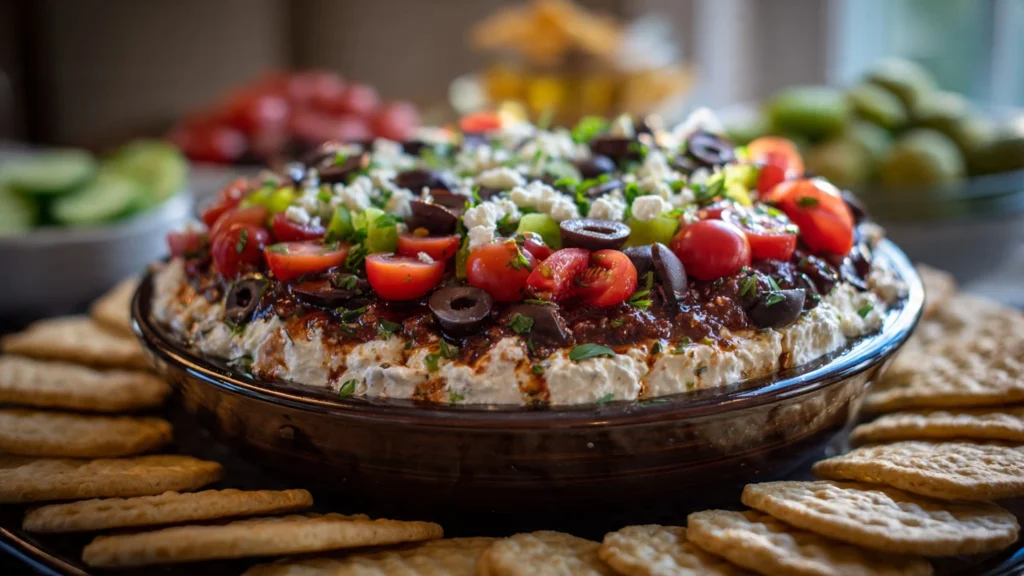
Choose a clear glass serving dish, such as a 9-inch pie plate or an 8×8 inch square dish, to showcase the beautiful layers
- First Layer (Hummus): Spread the hummus evenly across the bottom of the dish .
- Second Layer (Tzatziki): Gently spread the prepared tzatziki over the hummus, leaving a small border to show the layer underneath .
- Third Layer (Protein): If using, sprinkle the cooled seasoned chicken or spiced chickpeas evenly over the tzatziki.
- Fourth Layer (Vegetables): Scatter the prepared tomato, cucumber, and onion mixture over the top.
- Fifth Layer (Olives): Sprinkle the chopped Kalamata olives evenly over the vegetables.
- Sixth Layer (Feta): Top generously with the crumbled feta cheese.
- Seventh Layer (Garnish): Finish with a sprinkle of fresh parsley and dill, followed by a final drizzle of robust extra virgin olive oil .
Step 5: Chill and Serve
Cover the dip with plastic wrap and refrigerate for at least 2 hours, or up to 12 hours
. This chilling time is crucial as it allows the flavors to meld together, resulting in a much tastier dip
Recipe Notes
- Homemade Greek Seasoning: For a quick blend, combine 1 tbsp dried oregano, 2 tsp garlic powder, 2 tsp onion powder, 1 tsp dried thyme, and ½ tsp black pepper .
- Make-Ahead: This dip is perfect for making ahead . You can assemble the entire dip up to a day in advance; just wait to add the final garnish of fresh herbs and olive oil until just before serving for maximum freshness .
- Recommended Equipment: A good quality 8×8 inch glass dish , a fine-mesh strainer , and a sharp chef’s knife are key tools for this recipe. [Note to publisher: This is a great spot for affiliate links]
Variations and Customizations
One of the best things about this dip is how easy it is to customize
. Feel free to get creative and tailor it to your tastes!
- Add a Spicy Kick: For those who like a bit of heat, use a spicy hummus for the base layer or sprinkle a fine layer of red pepper flakes over the top before serving.
- Boost the Veggies: Add another layer of flavor and nutrition with finely chopped roasted red peppers, marinated artichoke hearts, or even a layer of chopped spinach .
- Make it Vegan: This dip is easily made vegan. Simply use your favorite plant-based Greek yogurt and a vegan feta cheese alternative. Ensure your hummus is dairy-free.
Tips for Dip Perfection and Serving Suggestions
A few simple tricks can make all the difference in creating a truly ultimate Greek Seven Layer Dip
- Don’t Skip the Draining: The most common pitfall with layered dips is excess moisture . Salting and draining the cucumber for the tzatziki is non-negotiable . Similarly, seeding your Roma tomatoes and patting them dry can help maintain the integrity of the layers .
- Quality Ingredients Matter: With a simple recipe like this, the quality of your ingredients will shine through . Use fresh herbs, a good quality olive oil, and buy a block of feta cheese in brine for the best flavor and texture .
- Layering Technique: When spreading the layers, be gentle . Use the back of a spoon to create even layers without mixing them together. Leaving a slight border for each layer not only looks beautiful in a glass dish but also makes it easier to see all the delicious components .
What to Serve with Your Greek Dip?
The perfect dipper is essential to enjoy every last bit of your creation
. Here are some classic and creative options:
- Pita Bread & Chips: Warm, soft pita bread cut into triangles is the classic choice, while pita chips offer a satisfying crunch .
- Fresh Vegetables: For a healthier, gluten-free option, offer an array of fresh veggies like cucumber slices, bell pepper strips, carrot sticks, celery, and cherry tomatoes .
- Crackers & More: Sturdy crackers, toasted baguette slices, pretzels, or even crispy falafel work wonderfully .
- Beyond Dipping: Think outside the box! Use this dip as a flavorful spread for sandwiches and wraps, a topping for grilled chicken, or as the base for a deconstructed Greek salad bowl .
Frequently Asked Questions
- How do I keep my Greek dip from getting watery?
The key is moisture control . The most important step is to salt, drain, and squeeze the grated cucumber for the tzatziki layer . Additionally, use seeded Roma tomatoes and pat them dry before adding them to the dip . - Can I make this Greek Seven Layer Dip ahead of time?
Absolutely! This is a great make-ahead Greek layer dip . You can assemble the entire dip up to 24 hours in advance . For best results, cover it tightly and store it in the refrigerator. Wait to add the final garnish of fresh herbs and the olive oil drizzle until just before serving to keep them looking and tasting fresh . - What is the best feta for this dip?
For the best flavor and texture, always choose a block of feta cheese that is sold in brine . It is creamier and has a more pronounced tangy flavor than pre-crumbled varieties . For the most authentic experience, look for sheep’s milk feta with a PDO label . - How do I make my hummus extra smooth?
For restaurant-quality smooth hummus, simmer your chickpeas (even canned ones) with a pinch of baking soda to soften them . Blend them while they are still warm, and stream in ice-cold water while the food processor is running to create a light, whipped texture