


Table of Contents
Introduction
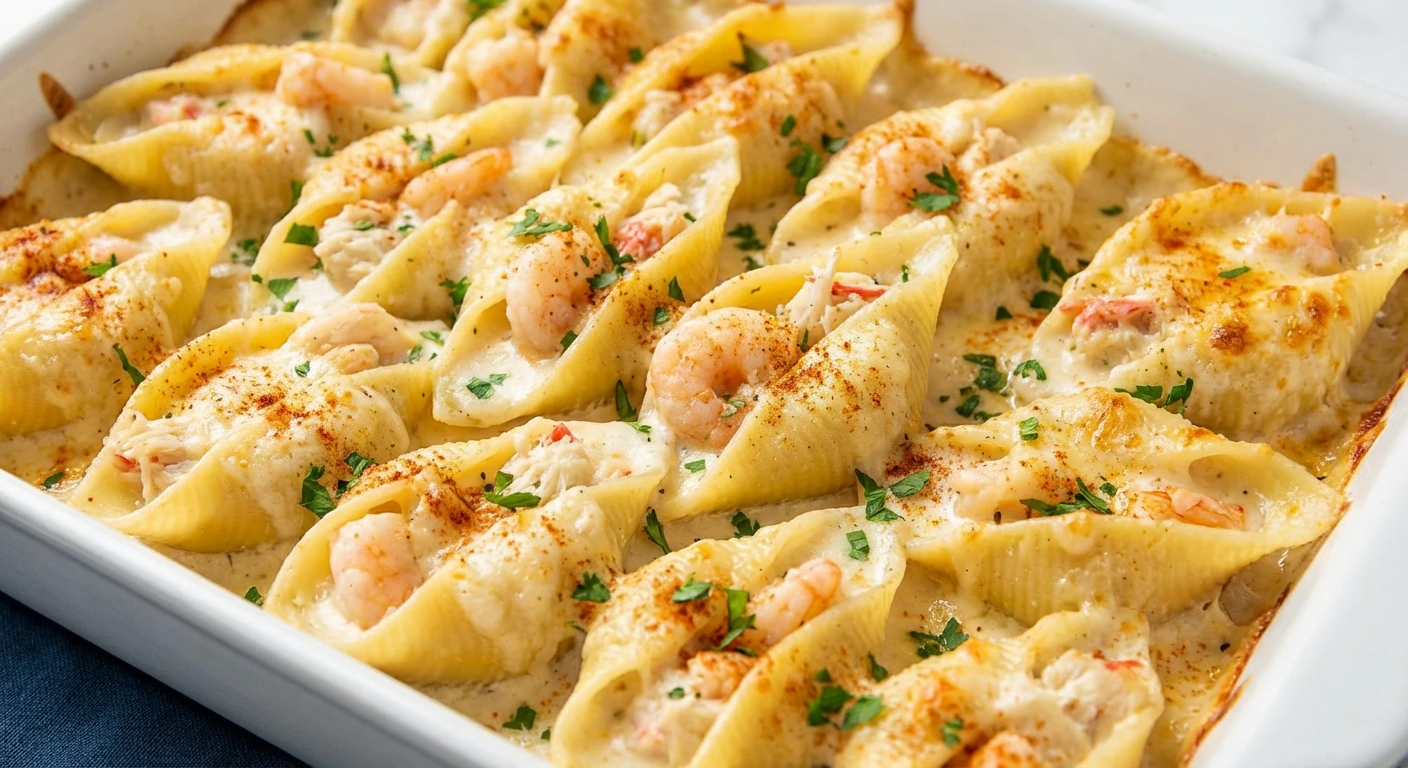
Creamy Seafood Stuffed Shells are a decadent and comforting dish, perfect for a special occasion yet simple enough for a weeknight dinner
. This elegant meal features jumbo pasta shells filled with a savory mixture of seafood, nestled in a rich, creamy sauce, and baked to bubbly perfection
. Imagine plump pasta shells loaded with a delightful combination of crab, shrimp, and scallops, all bathed in a velvety sauce and topped with golden, buttery breadcrumbs
. This article provides a comprehensive guide to creating this impressive dish at home, from its historical roots to expert troubleshooting techniques and modern-day variations.
A Taste of History: The Story of Stuffed Shells
The concept of stuffing pasta is a time-honored Italian tradition with roots stretching back to at least the Middle Ages
. Initially, stuffed pastas like ravioli were labor-intensive dishes reserved for special occasions, symbolizing wealth and abundance
The pasta shape itself, conchiglie or “seashells,” originated in Southern Italy
. Over time, a larger version known as conchiglioni or jumbo shells was developed specifically for the purpose of stuffing
. While the pasta shell is Italian, the specific baked dish of “stuffed shells” as it is widely known today is largely considered an Italian-American creation
. This dish gained immense popularity with the wave of Italian immigration to the United States, where traditional recipes were adapted to new ingredients and a desire for convenience
In Italian-American kitchens, stuffed shells are typically filled with a creamy ricotta-based cheese mixture and baked in a generous amount of tomato sauce
. In Italy, however, the fillings for conchiglioni ripieni can be more elaborate, sometimes featuring minced meat alongside ricotta and a classic béchamel sauce instead of a red sauce
. This recipe for Creamy Seafood Stuffed Shells pays homage to both traditions, combining the beloved jumbo shell form with a luxurious, béchamel-style seafood filling.
Key Components of the Dish
This restaurant-quality dish is surprisingly straightforward to assemble
. The core components consist of the pasta shells, a flavorful seafood filling, and a luscious creamy sauce.
For the Pasta:
- Jumbo pasta shells (conchiglioni) are essential for this recipe, as their size makes them easy to fill and provides ample space for the seafood stuffing .
For the Seafood Filling:
The filling is where this dish truly shines. The key to a succulent filling is to use quality ingredients, avoid overcooking the seafood, and control moisture
- Shrimp: Small shrimp (41-50 per pound) are ideal, but larger shrimp can be chopped into bite-sized pieces . To ensure tenderness, use raw shrimp and chop it into small, fingernail-sized pieces before adding to the filling .
- Scallops: Dry-packed sea scallops are preferred for their flavor . They should be chopped into small pieces to blend well with the other seafood . Since they will cook in the oven, they can be added raw or very lightly cooked to an internal temperature of 115°F .
- Choosing Your Crab: The type of crabmeat you select will have a significant impact on the dish’s final flavor, texture, and cost .
- Lump Crabmeat: Considered the gold standard, lump crabmeat consists of large, firm pieces from the crab’s body . It has a sweet, delicate, and mild flavor that allows the pure taste of crab to shine . It is a more expensive option but provides a satisfying, meaty texture that holds its shape well in the filling .
- Claw Crabmeat: Harvested from the claws, this meat has a more robust, stronger, and brinier crab flavor . Its texture is coarser and more fibrous, and it tends to shred more easily when mixed . As a more budget-friendly choice, its assertive flavor stands up well to rich, creamy sauces .
- Surimi (Imitation Crab): The most affordable option, surimi is made from minced pollock fish and is designed to mimic crab . It has a mild flavor that absorbs the other flavors in the dish and a uniform, sometimes slightly rubbery texture . It’s a practical choice for casual family meals where the overall creamy character is the main focus .
Beyond the Classics: Alternative Seafood Fillings
Beyond the common choices, a variety of other seafood can elevate your stuffed shells, each offering a unique flavor and texture
- Luxurious Lobster: For a truly decadent dish, incorporate lobster .
- Flavor and Texture: Lobster provides a sweet, rich, and succulent flavor with a firm, meaty texture that offers a more substantial bite than shrimp or crab .
- Preparation: It is crucial to pre-cook the lobster to ensure a tender texture . Broil or poach lobster tails for 5–7 minutes until the meat is just opaque . Once cooled, chop the meat into bite-sized pieces and pat it dry with paper towels to remove excess moisture before mixing it into the filling . Its delicate flavor is enhanced by garlic, lemon zest, and fresh herbs like parsley or chives .
- Briny Mussels and Clams: These shellfish infuse the filling with a pronounced, briny flavor of the sea .
- Flavor and Texture: Mussels and clams contribute a robust, salty, and oceanic flavor that is more assertive than white fish or lobster . When cooked correctly, their texture is tender and pleasantly chewy .
- Preparation: First, thoroughly clean the shellfish by scrubbing the shells and soaking them in cold, salted water to remove grit . Discard any with broken shells or that don’t close when tapped . Steam them in a pot with a small amount of liquid (like white wine and garlic) for 5–10 minutes, just until they open . Remove them from the heat immediately to prevent a rubbery texture . After cooling, remove the meat from the shells, chop it, and drain it well . Canned chopped clams are a convenient alternative; just be sure to drain them thoroughly . For extra flavor, you can strain the cooking liquid and add it to the cream sauce .
- Flaky Firm White Fish: Fish like cod, haddock, and halibut offer a milder seafood flavor and a delicate, flaky texture that can lighten the dish .
- Flavor and Texture: These fish have mild, delicate flavors that won’t overpower the creamy sauce . Cod has a clean flavor and large, meaty flakes . Haddock is slightly sweeter with a more delicate, finer-flaked texture . Halibut offers a sweet, rich flavor and a firm, dense texture. For a more complex profile, smoked haddock can be used for its rich, smoky taste .
- Preparation: You can either pre-cook the fish by baking or pan-searing it until it flakes easily, then mix the flaked meat into the filling . Alternatively, you can finely dice the raw fish and combine it with binders like ricotta and breadcrumbs, allowing it to cook in the oven with the shells . In either case, ensure any excess liquid is drained from the fish to prevent a watery filling .
For the Creamy Sauce and Binders:
The sauce and binders bring everything together into a cohesive, creamy delight.
- Cheeses: A blend of cheeses like ricotta, Parmesan, and mozzarella adds creaminess and flavor . Ricotta is a classic filling for stuffed pasta, and cream cheese is frequently used to create a smooth, rich base . For the smoothest sauce, always grate cheese from a block to avoid the anti-caking agents in pre-shredded varieties that can cause a grainy texture .
- Binders: Eggs and mayonnaise are often used to bind the seafood filling, adding to its creamy texture and helping it hold together .
- Aromatics and Seasonings: Garlic, onions or shallots, and fresh parsley are common aromatics . Seasoning blends like Old Bay add a classic seafood flavor, while a pinch of red pepper flakes can add a little heat .
- Sauce Base: The creamy sauce is typically a béchamel or an Alfredo-style sauce, often made with butter, flour, milk or heavy cream, and Parmesan cheese . To add depth without alcohol, you can use chicken, vegetable, or seafood broth as a substitute for white wine . A splash of lemon juice or white wine vinegar can replicate the necessary acidity .
Crafting Your Creamy Seafood Stuffed Shells: A Step-by-Step Guide
This recipe brings together the best elements from various sources to create a truly spectacular dish.

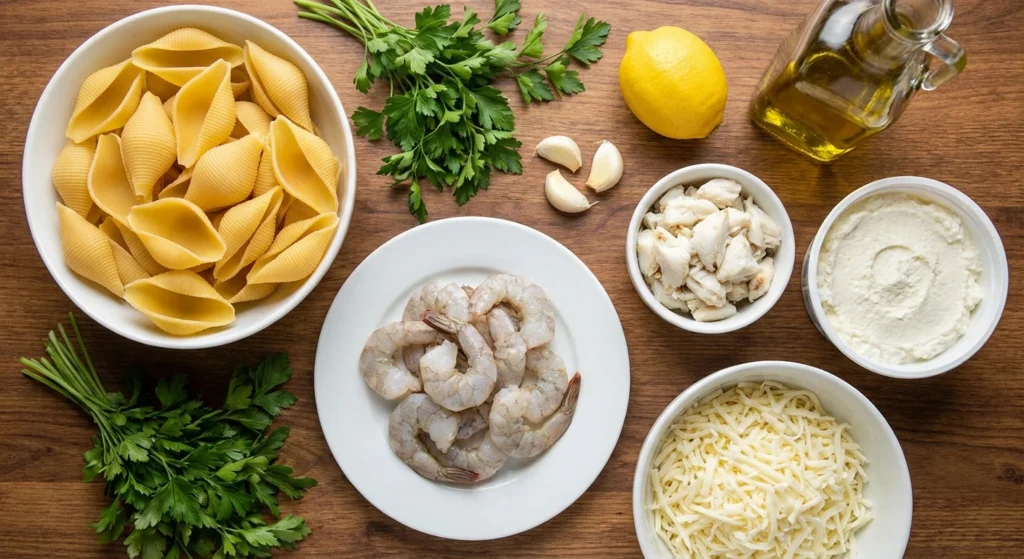
Ingredients
For the Pasta:
For the Seafood Filling:
- 8 ounces raw shrimp, peeled, deveined, and roughly chopped
- 8-12 ounces lump crabmeat, picked over for shells
- 8 ounces raw sea scallops, chopped (optional)
- 1 cup ricotta cheese
- 8 ounces cream cheese, softened
- 1/2 cup freshly grated Parmesan cheese
- 1 large egg, lightly beaten
- 1/4 cup mayonnaise
- 1 shallot or 1/4 cup onion, finely chopped
- 2 cloves garlic, minced
- 2 tablespoons fresh parsley, minced
- 1 teaspoon Old Bay seasoning
- Salt and freshly ground black pepper to taste
For the Creamy Sauce:
- 4 tablespoons unsalted butter
- 1/4 cup all-purpose flour
- 4 cups milk or a mix of milk and heavy cream
- 1 cup freshly grated Parmesan cheese
- Optional Flavor Enhancer: 1/4 cup chicken broth plus 1 tsp lemon juice
- Salt and pepper to taste
For the Topping (Optional):
Instructions
- Cook the Pasta Shells: Bring a large pot of salted water to a boil . Cook the jumbo shells according to package directions, but undercook them by about 2-3 minutes so they remain al dente . They will finish cooking and absorb more sauce in the oven . Drain the shells and rinse them with cold water to stop the cooking process and make them easier to handle . To prevent sticking, spread them in a single layer on a greased baking sheet or parchment paper .
- Prepare the Seafood: Ensure all seafood is properly thawed if frozen . Pat the shrimp, scallops, and crabmeat dry with paper towels to remove excess moisture, which helps prevent a watery filling and ensures a better texture . Chop the raw shrimp and scallops into small, fingernail-sized pieces . Ensure your crabmeat is picked over for any shell fragments .
- Make the Seafood Filling: In a large bowl, combine the ricotta cheese, softened cream cheese, Parmesan cheese, beaten egg, and mayonnaise . Stir until smooth . Add the minced shallot (or onion), garlic, parsley, and Old Bay seasoning . Gently fold in the chopped raw shrimp and scallops . If using pre-cooked crabmeat, gently fold it in at the very end to keep the delicate lumps intact . Mix well and season with salt and pepper to taste .
- Prepare the Creamy Sauce: In a saucepan, melt 4 tablespoons of butter over medium heat . Whisk in the flour to create a roux and cook for about one minute . If using a non-alcoholic flavor enhancer, add the broth and lemon juice mixture and allow it to reduce slightly . Gradually whisk in the milk or cream, ensuring there are no lumps . Bring the sauce to a simmer and cook for about 2 minutes, or until it has thickened enough to coat the back of a spoon . Remove the pan from the heat before gradually whisking in the grated Parmesan cheese; this prevents the cheese from overheating and creating a grainy sauce . Season with salt and pepper.
- Assemble the Dish: Preheat your oven to 375°F (190°C) . Spread a thin layer of the creamy sauce on the bottom of a 9×13-inch baking dish to prevent sticking . Using a small spoon or a piping bag, fill each cooked pasta shell with a generous amount of the seafood mixture . Arrange the stuffed shells in a single layer in the baking dish, open side up .
- Bake: Pour the remaining sauce evenly over the stuffed shells, ensuring they are well-covered to prevent them from drying out . If using a topping, toss the breadcrumbs with melted butter and combine with shredded mozzarella, then sprinkle over the shells . Bake, uncovered, for 25-30 minutes, or until the sauce is bubbly and the filling is heated through to an internal temperature of 165°F . If the sauce appears too thin, you can let it bake for an extra 5-10 minutes to allow excess liquid to evaporate .
- Rest and Serve: Let the dish rest for 5-10 minutes before serving to allow the sauce to set slightly . Garnish with fresh parsley.
Troubleshooting Common Problems
Even with a great recipe, challenges can arise. Here’s how to troubleshoot the most common issues for perfect results every time.
Problem: A Watery Filling
- Cause: Excess moisture from improperly drained ingredients or a sauce that is too thin .
- Solution:
- Control Moisture: Thoroughly drain any canned ingredients like crabmeat and pat all seafood dry with paper towels after cooking or thawing . If adding high-moisture vegetables like mushrooms or spinach, sauté them first to release their water .
- Undercook the Pasta: Cooking the shells al dente allows them to absorb some of the sauce during baking, which helps thicken the final dish .
- Thicken the Sauce: Ensure your cream sauce is thick enough to coat a spoon before assembling . If it seems thin, simmer it a bit longer to reduce or thicken with a cornstarch slurry (1 tbsp cornstarch mixed with 2 tbsp cold water) .
- Use a Slotted Spoon: When transferring cooked seafood like bay scallops or mussels to the filling, use a slotted spoon to leave excess moisture behind .
Problem: A Grainy Sauce
- Cause: The cheese sauce has overheated and separated, or you’ve used pre-shredded cheese with anti-caking agents .
- Solution:
- Grate Your Own Cheese: Always grate cheese from a block. It melts much more smoothly than pre-shredded varieties .
- Use Low Heat: Heat is the enemy of a smooth cheese sauce . Remove the saucepan from the heat before you whisk in the cheese, adding it gradually until melted .
- Add a Stabilizer: A small amount of acid, like the lemon juice in this recipe, can help stabilize the cheese and prevent it from breaking .
- Rescue a Broken Sauce: If your sauce does break, let it cool slightly and then blend it with an immersion blender or in a food processor until smooth .
Problem: Rubbery Seafood
- Cause: The delicate seafood, especially shrimp and crab, has been overcooked .
- Solution:
- Use Raw Shrimp/Scallops: Adding raw, chopped shrimp and scallops to the filling allows them to cook perfectly in the oven without becoming tough .
- Add Pre-cooked Crab Last: Since most crabmeat is sold pre-cooked, it only needs to be heated through . Gently fold it into the filling at the very end to avoid over-mixing and overcooking .
- Mind the Time with Shellfish: When pre-cooking items like mussels or clams, remove them from the heat as soon as their shells open to avoid a rubbery texture .
- Monitor Baking Time: Be mindful not to bake the dish for too long. The goal is to heat the filling through and get the sauce bubbly .
Make-Ahead and Freezing Instructions
This dish is an excellent candidate for making ahead.
- Refrigeration: You can assemble the entire dish (without the topping), cover it tightly, and refrigerate it for up to 24 hours . When ready to bake, add the topping and increase the baking time by 5-10 minutes .
- Freezing:
- How to Freeze: Assemble the dish in a freezer-safe baking dish but do not bake . Cover tightly with a layer of plastic wrap and then a layer of aluminum foil to prevent freezer burn . Label and freeze for up to 3 months .
- Baking from Frozen: For the best texture, thaw the dish overnight in the refrigerator . If thawed, bake as directed, adding 5-10 minutes to the time . To bake directly from frozen, preheat the oven to 375°F (190°C) . Cover the dish with foil and bake for 50-60 minutes, then remove the foil for the last 10-20 minutes to allow the top to become golden and bubbly . Ensure the internal temperature reaches 165°F .
Serving and Storage
Serving Suggestions:
This rich, creamy dish pairs best with sides that offer a fresh, crisp, or acidic contrast to cut through the richness.
- Simple Salads: A light green salad with a bright vinaigrette is a perfect choice . Also consider an arugula salad with lemon and Parmesan or a Caprese salad with fresh tomatoes and basil .
- Roasted or Grilled Vegetables: Roasting brings out the natural sweetness of vegetables. Try roasted asparagus, lemon butter broccoli, or grilled zucchini .
- Crusty Bread: Warm, crusty garlic bread or a baguette is essential for soaking up every last bit of the delicious cream sauce .
- Lighter Fare: For a unique pairing, try steamed artichokes with a lemon-butter dipping sauce .
Storing and Reheating:
- Refrigerator: Store leftovers in an airtight container for up to 3 days .
- Reheating: To prevent the seafood from becoming rubbery, reheat leftovers gently. The best method is in a covered skillet over low-medium heat with a splash of milk, cream, or broth to create steam and restore the sauce’s consistency