


Table of Contents
Introduction
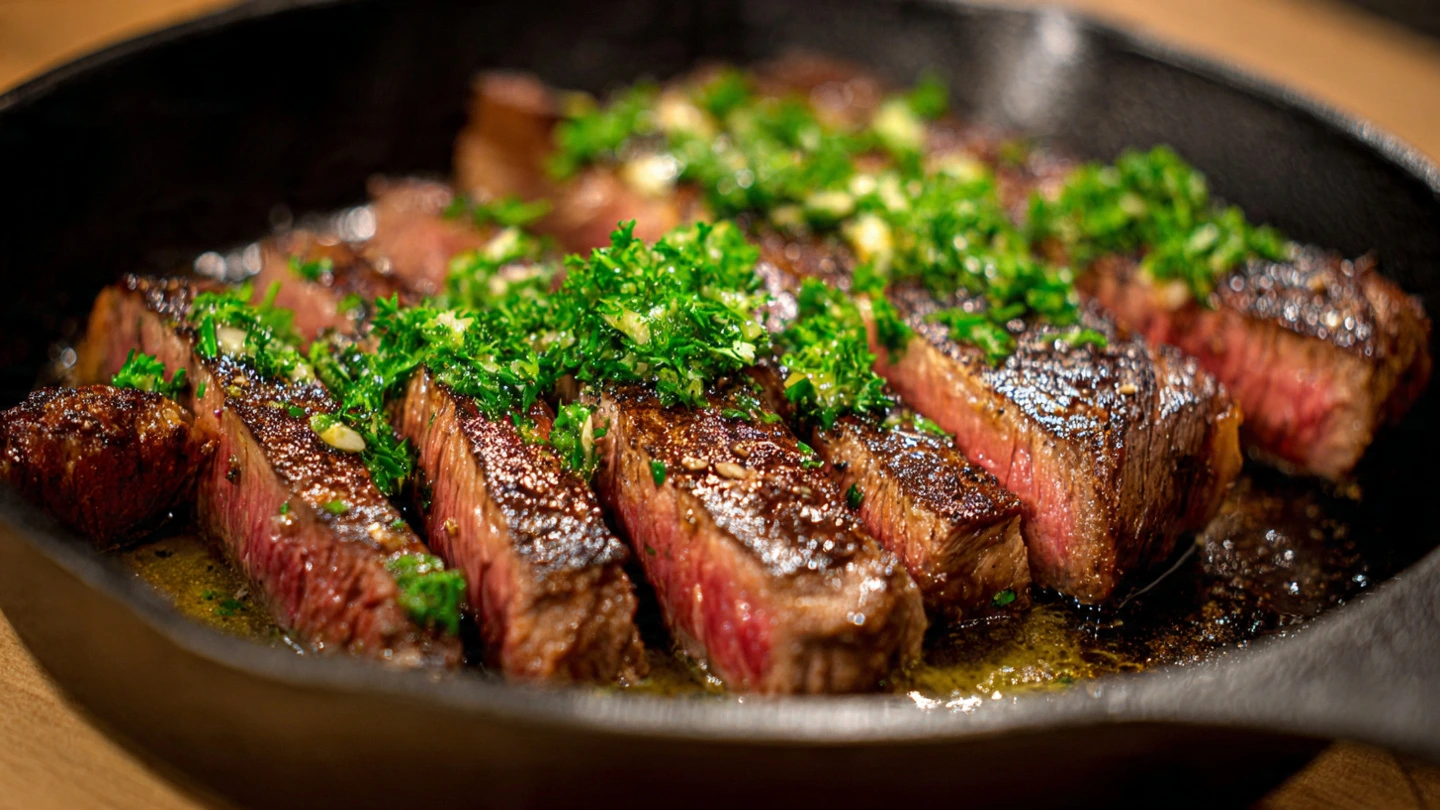
Creating a restaurant-quality steak dinner at home can be a rewarding experience, and the secret often lies in mastering a few key techniques
. This guide will walk you through creating a succulent garlic butter steak with a perfect, deep-brown crust, complemented by a rich and creamy parmesan sauce that’s smooth and luscious
. This impressive dish is surprisingly straightforward to prepare, making it ideal for a special occasion or a weeknight indulgence.
The Science of a Perfect Sear: The Maillard Reaction
The coveted, flavorful crust on a steak is the result of a chemical process called the Maillard reaction
. This reaction occurs when the amino acids and sugars in the meat are exposed to high, dry heat—typically between 280°F and 330°F (140°C to 165°C)
. Moisture is the enemy of this process; if the steak’s surface is wet, it will steam at 212°F (100°C), preventing the temperature from rising high enough to create that complex, savory crust
. Understanding this is the key to avoiding a bland, gray steak
Choosing Your Steak
The foundation of this exceptional meal is a quality cut of steak
- Thickness: For pan-searing, look for steaks that are at least one to one-and-a-half inches thick . This thickness helps in achieving a perfect sear on the outside while keeping the inside tender and juicy .
- Marbling: Well-marbled cuts like Ribeye or New York Strip are excellent choices, as the intramuscular fat renders during cooking, adding immense flavor and aiding the searing process .
Recommended cuts include:
- Ribeye: Known for its rich marbling and incredible flavor .
- New York Strip (or Porterhouse/T-bone): A great balance of tenderness and a beefy flavor .
- Sirloin: A leaner and more budget-friendly option that is still tender and flavorful .
Ingredients
Here are the components you’ll need to create this delectable dish:

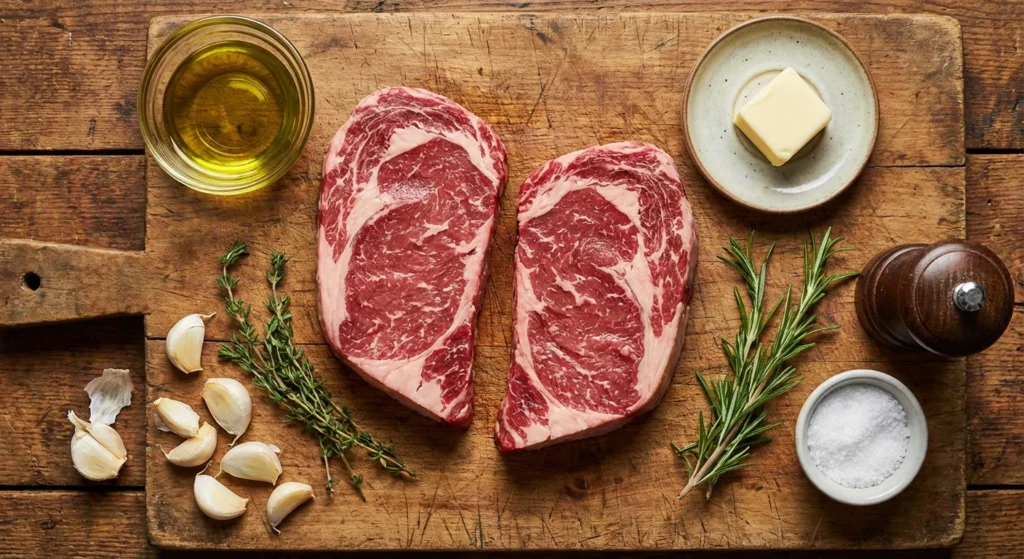
For the Garlic Butter Steak:
- 2 of your favorite cut of steaks, about 1 to 1.5 inches thick
- 1 tablespoon of a high-smoke-point oil like avocado, grapeseed, or canola oil
- 4-5 tablespoons of unsalted butter
- 4-6 cloves of garlic, whole and lightly smashed
- A few sprigs of fresh thyme or rosemary
- Kosher salt and freshly ground black pepper to taste
For the Parmesan Cream Sauce:
- 2 tablespoons of unsalted butter
- 3-4 cloves of garlic, minced
- 1 cup of heavy cream, preferably at room temperature
- ½ cup of freshly grated Parmesan cheese . Note: For the smoothest sauce, using a block of Parmesan and grating it yourself is essential . Pre-shredded cheeses contain anti-caking agents like cellulose and potato starch, which prevent the cheese from melting evenly and can result in a grainy texture .
- Salt and freshly ground black pepper to taste
- Freshly chopped parsley for garnish
- Optional Add-ins: A splash of beef broth to adjust consistency, a pinch of red pepper flakes for heat, or sautéed mushrooms and shallots for an earthier flavor .
Step-by-Step Instructions
Follow these simple steps to cook your garlic butter steak and parmesan cream sauce to perfection.
1. Prepare the Steak
- Bring to Room Temperature: About 30-60 minutes before you plan to cook, take the steaks out of the refrigerator . A less-chilled steak cooks more evenly and prevents the pan from cooling down too much .
- Pat It Bone-Dry: This is the most critical step for a great crust . Use paper towels to pat the steaks completely dry on all sides . A dry surface is essential for the Maillard reaction to occur; a wet steak will steam .
- Season Generously: For the best results, season the steak liberally with kosher salt at least 40 minutes before cooking and let it rest on a wire rack . This dry-brining process draws out moisture that then gets reabsorbed, seasoning the meat deeply and further drying the surface . If you’re short on time, season generously with salt and pepper immediately before cooking .
2. Sear the Steak
- Preheat the Pan: Place a large, heavy-bottomed skillet (preferably cast-iron or heavy stainless steel) over high heat and let it get searingly hot for 3-5 minutes . The pan is ready when a drop of water evaporates instantly or the oil shimmers and moves like water . An ideal surface temperature is between 400-500°F (204-260°C) .
- Add Oil and Steak: Add the high-smoke-point oil to the hot skillet . Carefully place the seasoned steaks in the pan, ensuring you don’t overcrowd it; cook in batches if necessary to prevent steaming . You should hear a loud, sustained sizzle . Press the steak down gently to ensure full contact with the pan .
- Develop the Crust: Sear the steaks for about 2-4 minutes on the first side without moving them, until a deep brown crust forms . Avoid the temptation to move the steak, as this disrupts crust formation . Flip the steaks and cook for another 1-2 minutes to sear the other side .
3. Add Garlic Butter and Baste
- Lower the Heat: Reduce the heat to medium-low .
- Add Aromatics: In the last 1-2 minutes of cooking, add the butter, smashed garlic cloves, and fresh thyme or rosemary sprigs to the skillet . Adding these at the end prevents the butter and garlic from burning at high searing temperatures .
- Baste Continuously: As the butter melts and foams, tilt the pan and use a spoon to continuously baste the steak with the infused butter . This process adds incredible flavor and helps cook the steak evenly . Continue to baste for another 1-2 minutes .
4. Check for Doneness
The most reliable way to get your preferred doneness is by using an instant-read meat thermometer
. Remember that the internal temperature will continue to rise by about 5-10 degrees as the steak rests due to “carryover cooking”
. Pull the steak from the pan when it’s 5-10 degrees below your target temperature.
5. Rest the Steak: The Science of a Juicy Bite
This step is non-negotiable for a succulent result
. When cooked, the intense heat causes the steak’s muscle fibers to contract and tighten, pushing the flavorful juices toward the cooler center of the cut
. If you slice into it immediately, these concentrated juices will spill out, leaving the meat dry
- How it Works: Resting allows the steak to cool slightly, which lets the constricted muscle fibers relax and widen . This creates space for the juices to be reabsorbed and distributed evenly from the center to the edges, ensuring every bite is moist and tender .
- How to Do It: Transfer the steak to a cutting board or a wire rack (which keeps the bottom crust from getting soggy) . Let it rest for 5-10 minutes . You can tent it loosely with foil to keep it warm, but don’t seal it tightly, as this will steam the crust .
6. Make the Parmesan Cream Sauce
You can make the sauce in the same skillet to incorporate the flavorful browned bits (fond) left from the steak, or use a separate saucepan
- After removing the steak, let the pan cool for a minute off the heat . Pour off any excess grease, leaving about a tablespoon.
- Return the skillet to medium heat and melt the butter . If adding mushrooms or shallots, sauté them now until golden brown .
- Add the minced garlic and sauté for about 30-60 seconds until fragrant, being careful not to burn it .
- Slowly whisk in the heavy cream . Scrape up any fond from the bottom of the pan to incorporate that flavor .
- Bring the sauce to a gentle simmer—never a rolling boil—and let it cook for 2-3 minutes to reduce and thicken slightly . Boiling a cream sauce can cause it to break or curdle .
- Remove the pan from the heat. This is key for a smooth sauce . Stir in the freshly grated Parmesan cheese until it’s completely melted . Adding cheese to a boiling sauce can make it grainy .
- Season with salt, pepper, and any other desired spices . If the sauce is too thick, you can whisk in a splash of beef broth or more cream to reach your desired consistency .
- Stir in fresh parsley just before serving .
7. Slice and Serve
- The Art of Slicing: How you slice the steak is the final touch for maximum tenderness . The “grain” refers to the direction of the muscle fibers . By slicing against the grain (perpendicular to the fibers), you shorten these tough fibers, making the meat much easier to chew .
- Identifying the Grain: Look for the long, parallel lines running through the meat . This is easier to see when the steak is raw .
- How to Slice: After resting, place the steak on a cutting board. Identify the grain, then position your knife perpendicular to it and slice into strips . Slicing on a slight bias (45-degree angle) can increase tenderness even more .
- Plating: Arrange the slices on a plate and generously spoon the warm parmesan cream sauce over the top . Garnish with more fresh parsley and serve immediately .
Troubleshooting Common Issues
- Problem: My steak is gray and steamed, not brown and crusty.
- Cause: This is almost always due to too much moisture or not enough heat . A wet steak, an overcrowded pan, or a pan that isn’t hot enough will cause the steak to steam instead of sear .
- Solution: Pat your steak completely dry . Ensure your pan is extremely hot before adding the steak . Cook in batches if necessary to avoid overcrowding .
- Problem: My garlic has a burnt, bitter flavor.
- Cause: Minced garlic burns very easily at high searing temperatures . Adding it too early is a common mistake .
- Solution: Add whole, lightly crushed garlic cloves only during the final 1-2 minutes of cooking when you add the butter and have reduced the heat . This infuses the butter with flavor without burning the garlic.
- Problem: My parmesan cream sauce is broken, grainy, or oily.
- Cause: This happens when the emulsion of fat and liquid separates . It’s usually caused by excessive heat (boiling the sauce) or adding cheese when the sauce is too hot . Using pre-shredded cheese is another major cause, as its anti-caking agents (cellulose, potato starch) inhibit smooth melting .
- Solution: Use heavy cream, which is more stable . Never let the sauce boil . Always remove the pan from the heat before stirring in freshly grated cheese . To fix a broken sauce, remove it from the heat and slowly whisk in a tablespoon of cold cream or water until it comes back together .
Make-Ahead, Storage, and Reheating
- Making the Sauce in Advance:
- Method 1: Prepare the entire sauce, cool, and store in an airtight container in the fridge for up to three days . Reheat gently over low heat, whisking in a splash of milk or cream to restore its consistency .
- Method 2 (Recommended): Prepare the sauce base (without the cheese). When ready to serve, gently reheat the base, remove it from the heat, and then stir in the freshly grated Parmesan .
- Storing Leftovers: Store the steak and sauce in separate airtight containers in the refrigerator to maintain their quality . The steak will last for 3-4 days .
- Reheating Leftover Steak: The goal is to warm the steak without cooking it further .
- Reheating Leftover Sauce: Cream sauces can break if reheated too quickly .
Perfect Pairings and Customizations
- Sauce Customizations: Swap Parmesan for Pecorino Romano, Asiago, or Gruyère . Add a pinch of red pepper flakes for heat or sautéed cremini mushrooms and shallots for a deep, savory flavor .
- Side Dishes: Creamy mashed potatoes or crusty bread are perfect for the sauce . Roasted asparagus, broccoli, or a simple green salad with vinaigrette can cut through the richness .
Executive Summary
This guide provides a comprehensive, step-by-step method for creating a restaurant-quality Garlic Butter Steak with Parmesan Cream Sauce. The key to a perfect steak lies in understanding the Maillard reaction, which requires a thick-cut steak, a bone-dry surface, and a searingly hot pan
. The steak is finished by basting with garlic-infused butter and must be rested for 5-10 minutes—a crucial step backed by science that allows muscle fibers to relax and reabsorb juices for maximum tenderness
. The final texture is perfected by slicing against the grainGarlic Butter Steak with Parmesan Cream Sauce Made Easy: Simple Steps for a Delicious Meal
Creating a restaurant-quality steak dinner at home can be a rewarding experience, and the secret often lies in mastering a few key techniques
. This guide will walk you through creating a succulent garlic butter steak with a perfect, deep-brown crust, complemented by a rich and creamy parmesan sauce that’s smooth and luscious
. This impressive dish is surprisingly straightforward to prepare, making it ideal for a special occasion or a weeknight indulgence.
The Science of a Perfect Sear: The Maillard Reaction
The coveted, flavorful crust on a steak is the result of a chemical process called the Maillard reaction
. This reaction occurs when the amino acids and sugars in the meat are exposed to high, dry heat—typically between 280°F and 330°F (140°C to 165°C)
. Moisture is the enemy of this process; if the steak’s surface is wet, it will steam at 212°F (100°C), preventing the temperature from rising high enough to create that complex, savory crust
. Understanding this is the key to avoiding a bland, gray steak
Choosing Your Steak
The foundation of this exceptional meal is a quality cut of steak
- Thickness: For pan-searing, look for steaks that are at least one to one-and-a-half inches thick . This thickness helps in achieving a perfect sear on the outside while keeping the inside tender and juicy .
- Marbling: Well-marbled cuts like Ribeye or New York Strip are excellent choices, as the intramuscular fat renders during cooking, adding immense flavor and aiding the searing process .
Recommended cuts include:
- Ribeye: Known for its rich marbling and incredible flavor .
- New York Strip (or Porterhouse/T-bone): A great balance of tenderness and a beefy flavor .
- Sirloin: A leaner and more budget-friendly option that is still tender and flavorful .
Ingredients
Here are the components you’ll need to create this delectable dish:
For the Garlic Butter Steak:
- 2 of your favorite cut of steaks, about 1 to 1.5 inches thick
- 1 tablespoon of a high-smoke-point oil like avocado, grapeseed, or canola oil
- 4-5 tablespoons of unsalted butter
- 4-6 cloves of garlic, whole and lightly smashed
- A few sprigs of fresh thyme or rosemary
- Kosher salt and freshly ground black pepper to taste
For the Parmesan Cream Sauce:
- 2 tablespoons of unsalted butter
- 3-4 cloves of garlic, minced
- 1 cup of heavy cream, preferably at room temperature
- ½ cup of freshly grated Parmesan cheese . Note: For the smoothest sauce, using a block of Parmesan and grating it yourself is essential . Pre-shredded cheeses contain anti-caking agents like cellulose and potato starch, which prevent the cheese from melting evenly and can result in a grainy texture .
- Salt and freshly ground black pepper to taste
- Freshly chopped parsley for garnish
- Optional Add-ins: A splash of beef broth to adjust consistency, a pinch of red pepper flakes for heat, or sautéed mushrooms and shallots for an earthier flavor .
Step-by-Step Instructions
Follow these simple steps to cook your garlic butter steak and parmesan cream sauce to perfection.
1. Prepare the Steak
- Bring to Room Temperature: About 30-60 minutes before you plan to cook, take the steaks out of the refrigerator . A less-chilled steak cooks more evenly and prevents the pan from cooling down too much .
- Pat It Bone-Dry: This is the most critical step for a great crust . Use paper towels to pat the steaks completely dry on all sides . A dry surface is essential for the Maillard reaction to occur; a wet steak will steam .
- Season Generously: For the best results, season the steak liberally with kosher salt at least 40 minutes before cooking and let it rest on a wire rack . This dry-brining process draws out moisture that then gets reabsorbed, seasoning the meat deeply and further drying the surface . If you’re short on time, season generously with salt and pepper immediately before cooking .
2. Sear the Steak
- Preheat the Pan: Place a large, heavy-bottomed skillet (preferably cast-iron or heavy stainless steel) over high heat and let it get searingly hot for 3-5 minutes . The pan is ready when a drop of water evaporates instantly or the oil shimmers and moves like water . An ideal surface temperature is between 400-500°F (204-260°C) .
- Add Oil and Steak: Add the high-smoke-point oil to the hot skillet . Carefully place the seasoned steaks in the pan, ensuring you don’t overcrowd it; cook in batches if necessary to prevent steaming . You should hear a loud, sustained sizzle . Press the steak down gently to ensure full contact with the pan .
- Develop the Crust: Sear the steaks for about 2-4 minutes on the first side without moving them, until a deep brown crust forms . Avoid the temptation to move the steak, as this disrupts crust formation . Flip the steaks and cook for another 1-2 minutes to sear the other side .
3. Add Garlic Butter and Baste
- Lower the Heat: Reduce the heat to medium-low .
- Add Aromatics: In the last 1-2 minutes of cooking, add the butter, smashed garlic cloves, and fresh thyme or rosemary sprigs to the skillet . Adding these at the end prevents the butter and garlic from burning at high searing temperatures .
- Baste Continuously: As the butter melts and foams, tilt the pan and use a spoon to continuously baste the steak with the infused butter . This process adds incredible flavor and helps cook the steak evenly . Continue to baste for another 1-2 minutes .
4. Check for Doneness
The most reliable way to get your preferred doneness is by using an instant-read meat thermometer
. Remember that the internal temperature will continue to rise by about 5-10 degrees as the steak rests due to “carryover cooking”
. Pull the steak from the pan when it’s 5-10 degrees below your target temperature.
5. Rest the Steak: The Science of a Juicy Bite
This step is non-negotiable for a succulent result
. When cooked, the intense heat causes the steak’s muscle fibers to contract and tighten, pushing the flavorful juices toward the cooler center of the cut
. If you slice into it immediately, these concentrated juices will spill out, leaving the meat dry
- How it Works: Resting allows the steak to cool slightly, which lets the constricted muscle fibers relax and widen . This creates space for the juices to be reabsorbed and distributed evenly from the center to the edges, ensuring every bite is moist and tender .
- How to Do It: Transfer the steak to a cutting board or a wire rack (which keeps the bottom crust from getting soggy) . Let it rest for 5-10 minutes . You can tent it loosely with foil to keep it warm, but don’t seal it tightly, as this will steam the crust .
6. Make the Parmesan Cream Sauce
You can make the sauce in the same skillet to incorporate the flavorful browned bits (fond) left from the steak, or use a separate saucepan
- After removing the steak, let the pan cool for a minute off the heat . Pour off any excess grease, leaving about a tablespoon.
- Return the skillet to medium heat and melt the butter . If adding mushrooms or shallots, sauté them now until golden brown .
- Add the minced garlic and sauté for about 30-60 seconds until fragrant, being careful not to burn it .
- Slowly whisk in the heavy cream . Scrape up any fond from the bottom of the pan to incorporate that flavor .
- Bring the sauce to a gentle simmer—never a rolling boil—and let it cook for 2-3 minutes to reduce and thicken slightly . Boiling a cream sauce can cause it to break or curdle .
- Remove the pan from the heat. This is key for a smooth sauce . Stir in the freshly grated Parmesan cheese until it’s completely melted . Adding cheese to a boiling sauce can make it grainy .
- Season with salt, pepper, and any other desired spices . If the sauce is too thick, you can whisk in a splash of beef broth or more cream to reach your desired consistency .
- Stir in fresh parsley just before serving .
7. Slice and Serve
- The Art of Slicing: How you slice the steak is the final touch for maximum tenderness . The “grain” refers to the direction of the muscle fibers . By slicing against the grain (perpendicular to the fibers), you shorten these tough fibers, making the meat much easier to chew .
- Identifying the Grain: Look for the long, parallel lines running through the meat . This is easier to see when the steak is raw .
- How to Slice: After resting, place the steak on a cutting board. Identify the grain, then position your knife perpendicular to it and slice into strips . Slicing on a slight bias (45-degree angle) can increase tenderness even more .
- Plating: Arrange the slices on a plate and generously spoon the warm parmesan cream sauce over the top . Garnish with more fresh parsley and serve immediately .
Troubleshooting Common Issues
- Problem: My steak is gray and steamed, not brown and crusty.
- Cause: This is almost always due to too much moisture or not enough heat . A wet steak, an overcrowded pan, or a pan that isn’t hot enough will cause the steak to steam instead of sear .
- Solution: Pat your steak completely dry . Ensure your pan is extremely hot before adding the steak . Cook in batches if necessary to avoid overcrowding .
- Problem: My garlic has a burnt, bitter flavor.
- Cause: Minced garlic burns very easily at high searing temperatures . Adding it too early is a common mistake .
- Solution: Add whole, lightly crushed garlic cloves only during the final 1-2 minutes of cooking when you add the butter and have reduced the heat . This infuses the butter with flavor without burning the garlic.
- Problem: My parmesan cream sauce is broken, grainy, or oily.
- Cause: This happens when the emulsion of fat and liquid separates . It’s usually caused by excessive heat (boiling the sauce) or adding cheese when the sauce is too hot . Using pre-shredded cheese is another major cause, as its anti-caking agents (cellulose, potato starch) inhibit smooth melting .
- Solution: Use heavy cream, which is more stable . Never let the sauce boil . Always remove the pan from the heat before stirring in freshly grated cheese . To fix a broken sauce, remove it from the heat and slowly whisk in a tablespoon of cold cream or water until it comes back together .
Make-Ahead, Storage, and Reheating
- Making the Sauce in Advance:
- Method 1: Prepare the entire sauce, cool, and store in an airtight container in the fridge for up to three days . Reheat gently over low heat, whisking in a splash of milk or cream to restore its consistency .
- Method 2 (Recommended): Prepare the sauce base (without the cheese). When ready to serve, gently reheat the base, remove it from the heat, and then stir in the freshly grated Parmesan .
- Storing Leftovers: Store the steak and sauce in separate airtight containers in the refrigerator to maintain their quality . The steak will last for 3-4 days .
- Reheating Leftover Steak: The goal is to warm the steak without cooking it further .
- Reheating Leftover Sauce: Cream sauces can break if reheated too quickly .
Perfect Pairings and Customizations
- Sauce Customizations: Swap Parmesan for Pecorino Romano, Asiago, or Gruyère . Add a pinch of red pepper flakes for heat or sautéed cremini mushrooms and shallots for a deep, savory flavor .
- Side Dishes: Creamy mashed potatoes or crusty bread are perfect for the sauce . Roasted asparagus, broccoli, or a simple green salad with vinaigrette can cut through the richness .
Executive Summary
This guide provides a comprehensive, step-by-step method for creating a restaurant-quality Garlic Butter Steak with Parmesan Cream Sauce. The key to a perfect steak lies in understanding the Maillard reaction, which requires a thick-cut steak, a bone-dry surface, and a searingly hot pan
. The steak is finished by basting with garlic-infused butter and must be rested for 5-10 minutes—a crucial step backed by science that allows muscle fibers to relax and reabsorb juices for maximum tenderness
. The final texture is perfected by slicing against the grain