
Table of Contents
Introduction
There are few meals as satisfying, vibrant, and effortlessly healthy as a well-crafted grain bowl. And when it comes to the pinnacle of bowl-based dining, the Mediterranean Greek Chicken Bowl, with its bright, zesty lemon and herb flavors, reigns supreme. This isn’t just a meal; it’s a journey to the sun-drenched shores of the Mediterranean, a delightful explosion of textures and tastes that nourishes both body and soul. This dish is celebrated for its simplicity, often coming together in 30 minutes or less, making it an ideal solution for busy weeknights.
Whether you’re a seasoned meal prepper, a busy professional seeking a quick and wholesome dinner, or simply someone who appreciates the art of a delicious and beautiful meal, this Mediterranean Greek Chicken Bowls recipe is your new go-to. This comprehensive guide will not only walk you through creating the most succulent, flavorful lemon herb chicken and assembling the perfect bowl but will also provide an in-depth look at the culinary principles behind each step. Get ready to elevate your lunch and dinner game with these amazing Greek chicken bowls.
Why You’ll Love These Mediterranean Greek Chicken Bowls
This one-dish meal is more than just a trend; it’s a lifestyle choice that packs a punch in every category. The magic of these Mediterranean Greek Chicken Bowls lies in the harmonious balance of the classic Greek flavor profile.
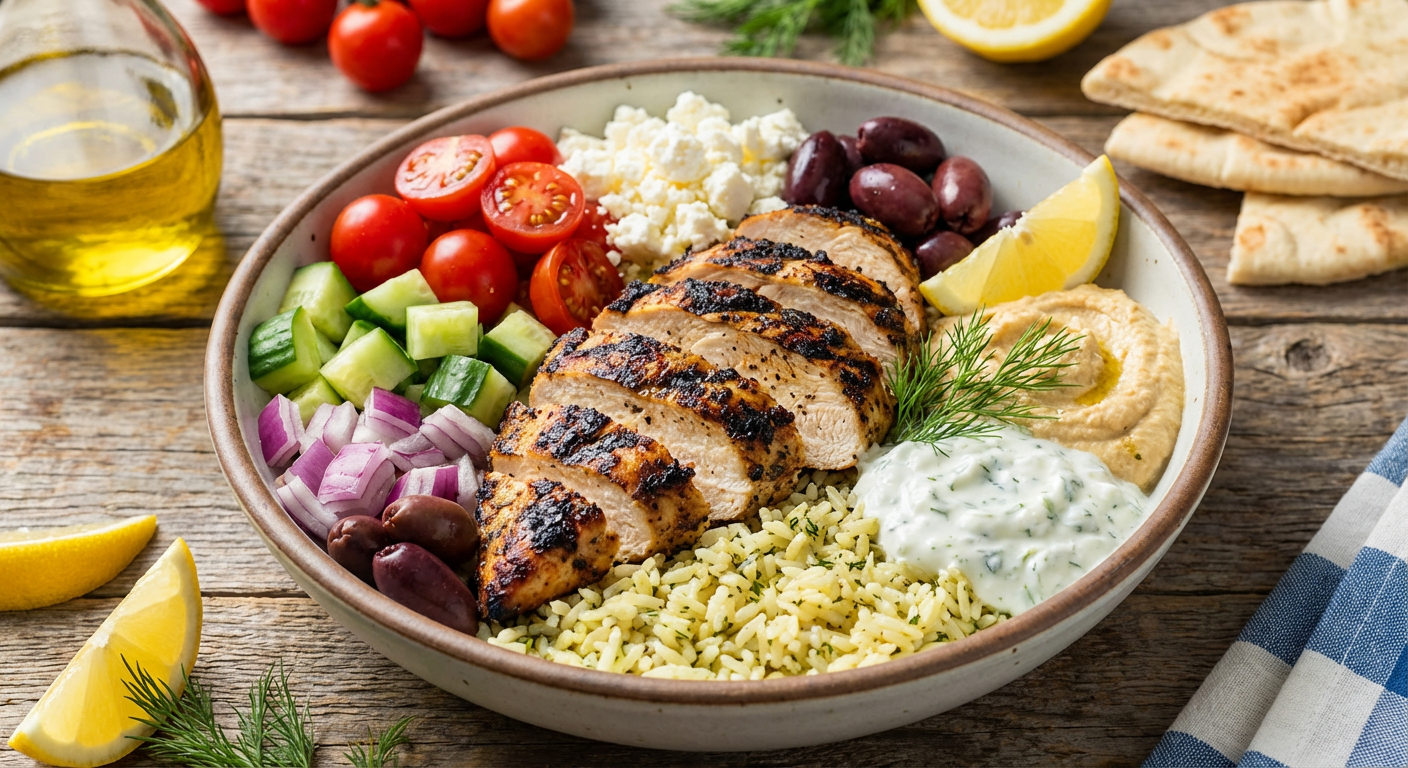
- Vibrant & Balanced Flavor: The core principle is balance. The bowl combines savory grilled chicken, briny olives, tangy feta, and crisp vegetables. This is all brought together by a zesty lemon-herb marinade and creamy tzatziki sauce, creating a symphony of fresh, bright, and savory flavors without relying on heavy, processed sauces.
- The Mediterranean Foundation: The flavor is built on a few key pillars:
- Zesty Lemon & Robust Olive Oil: Bright lemon juice and zest cut through richness, while fruity extra virgin olive oil serves as the foundational fat, carrying flavor throughout the dish.
- Aromatic Herbs & Alliums: Quintessential Greek oregano provides a peppery backbone, complemented by fresh dill and parsley, while pungent garlic and onion add savory depth.
- Savory Counterpoints: Tangy, creamy feta cheese and fruity, briny Kalamata olives provide essential salty counterpoints that make every bite interesting.
- Perfect for Busy Weeknights: This Mediterranean chicken recipe is celebrated for its ease of preparation, with many versions ready in 30 minutes or less. The components can be prepared simultaneously—grill the chicken while the grains cook and the vegetables are chopped—making it an ideal solution for a hectic schedule.
- A Meal-Prepper’s Dream: The elements of the bowl can be prepared in advance and stored for several days, making for convenient grab-and-go lunches or quick dinners. These meal prep chicken bowls are perfect for a healthy week.
- Nutrient-Dense and Balanced: This meal offers a well-rounded mix of lean protein, healthy fats from olive oil and feta, complex carbohydrates for sustained energy, and fiber-rich vegetables. It’s a satisfying and energizing meal that aligns with the principles of the heart-healthy Mediterranean diet.
The Ultimate Guide to Ingredients for Your Greek Chicken Bowl
To elevate your Mediterranean Greek Chicken Bowls from good to exceptional, the quality of your ingredients is paramount. Here’s how to choose the best for maximum authentic flavor.
Feta Cheese: Sheep’s Milk vs. Cow’s Milk
The cheese you choose can significantly impact the bowl’s authenticity and flavor profile.
- Authentic Greek Feta: True Greek feta has a Protected Designation of Origin (PDO) status and is made from at least 70% sheep’s milk, with the remainder being goat’s milk. It is never made from cow’s milk.
- Flavor and Texture: Due to its higher fat content, sheep’s milk feta is creamier, richer, and has a bold, tangy, and deeply savory flavor.
- Cow’s Milk Feta: Often labeled “feta-style,” this cheese is milder, less complex, and has a more crumbly, rubbery, or even spongy texture. While less expensive, it won’t deliver the same depth of flavor.
- Recommendation: For the most authentic experience, opt for a block of Greek feta made from sheep’s milk (or a sheep-goat blend) packed in brine. The PDO label guarantees its origin and quality.
Kalamata Olives: The Real Deal
Authentic Kalamata olives are a cornerstone of Greek cuisine, adding a crucial salty, umami kick to any Greek chicken bowl.
- Origin and Appearance: True Kalamata olives come from the Kalamata region in Greece and also have PDO status. They are almond-shaped with a pointed tip and have a deep purple, not black, color because they are harvested fully ripe.
- Curing and Flavor: They are naturally cured in a brine of water, sea salt, and sometimes red wine vinegar, which gives them a rich, fruity, and slightly smoky flavor with a firm, meaty texture.
- Recommendation: Choose olives that are deep purple, firm, and glossy. For the best quality, select those with a PDO certification, packed in a glass jar in brine or extra virgin olive oil.
Cucumbers: The English Advantage
The type of cucumber you use affects the texture and water content of your salads and sauces.
- English Cucumbers: These are often preferred for their thin, edible skin and small, undetectable seeds, which means no peeling or de-seeding is required. They have a milder, sweeter taste and lower water content, which prevents salads from becoming soggy.
- Best Uses:
- For the Salad: Their crisp texture and edible skin make them perfect for slicing directly into the bowl for a refreshing crunch.
- For Tzatziki: While they work well, it is crucial to grate, salt, and drain the cucumber to remove excess moisture. This step is key to ensuring a thick, creamy sauce rather than a watery one. Persian cucumbers are also an excellent choice.
How to Make Mediterranean Greek Chicken Bowls: The Recipe
This recipe is designed to be both delicious and adaptable. Feel free to customize the components to your liking.
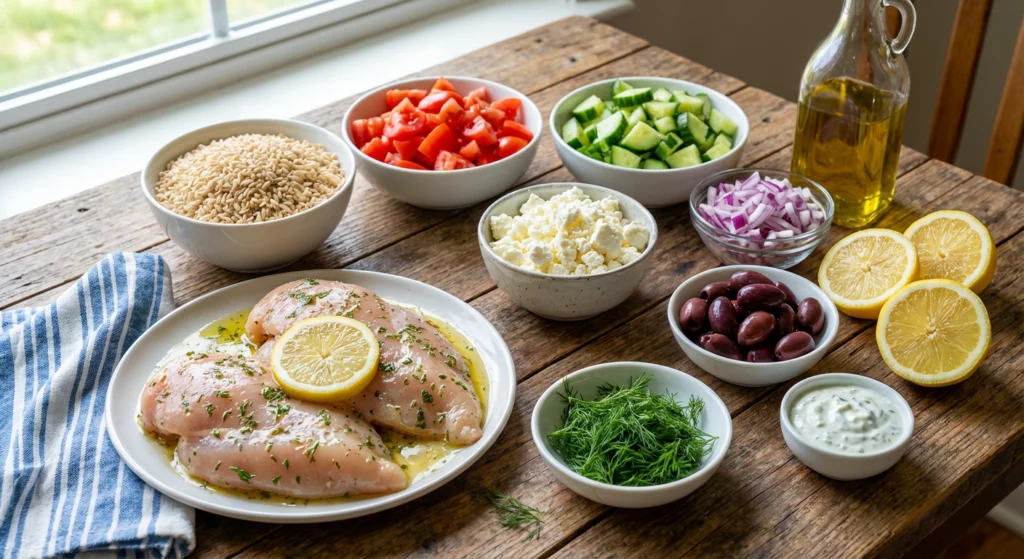
Yields: 4 servings
Prep time: 20 minutes
Marinating time: 30 minutes to 4 hours
Cook time: 15-20 minutes
Ingredients
For the Greek Lemon Chicken Marinade:
- 1.5 lbs boneless, skinless chicken breasts or thighs, pounded to an even ¾-inch thickness
- 1/4 cup extra virgin olive oil
- 1/4 cup fresh lemon juice (from about 1-2 lemons)
- 1 tablespoon lemon zest
- 4 cloves garlic, minced
- 1.5 teaspoons dried oregano
- 1 tablespoon chopped fresh dill
- 1 tablespoon chopped fresh parsley
- 1 teaspoon salt
- 1/2 teaspoon black pepper
For the Bowls:
- 2 cups cooked grain of your choice (quinoa, farro, brown rice)
- 1 English cucumber, chopped
- 1 pint cherry tomatoes, halved
- 1/2 red onion, thinly sliced
- 1/2 cup authentic Kalamata olives, pitted and halved
- 1/2 cup crumbled Greek sheep’s milk feta cheese
- Fresh parsley or dill, for garnish
For the Creamy Tzatziki Sauce:
- 1 cup plain Greek yogurt
- 1/2 English cucumber, grated
- 1 tablespoon fresh lemon juice
- 1 tablespoon chopped fresh dill
- 1 clove garlic, minced
- Salt and pepper to taste
Instructions
1. Craft a Potent Lemon-Herb Marinade
A great marinade is a balance of fat (oil), acid (lemon), and aromatics (herbs, garlic). The oil transfers fat-soluble flavors, while the acid tenderizes the protein.
- Mellow the Garlic: In a bowl, combine the minced garlic with the fresh lemon juice and let it sit for 5-10 minutes. This technique, called maceration, mellows the sharp bite of raw garlic for a deeper, more balanced flavor.
- Combine and Emulsify: To the lemon-garlic mixture, add the olive oil, lemon zest, dried oregano, fresh dill, parsley, salt, and pepper. For a thicker marinade that clings better to the chicken, use a small blender or immersion blender to pulse the mixture until emulsified.
- Marinate Effectively: Pound the chicken to an even ¾-inch thickness to ensure uniform cooking. Place the chicken in a zip-top bag with the marinade, ensuring it’s fully coated. Marinate in the refrigerator for at least 30 minutes, but ideally for 2-4 hours for optimal flavor. Avoid marinating longer than 8-12 hours, as the acidity can make the texture mushy.
2. Prepare the Creamy Tzatziki Sauce
- Place the grated cucumber in a fine-mesh sieve, sprinkle with a pinch of salt, and let it sit for 15-20 minutes to draw out excess water. Squeeze the cucumber firmly to remove all remaining moisture. This is the secret to a thick, creamy tzatziki.
- In a medium bowl, combine the drained cucumber, Greek yogurt, lemon juice, fresh dill, and minced garlic.
- Stir until well combined and season with salt and pepper to taste. For the best flavor, let it chill for at least 30 minutes.
3. Elevate Your Grains: The Flavorful Foundation
Grains absorb the flavor of their cooking liquid, so don’t treat them as an afterthought for your healthy chicken bowl.
- Toast the Grains: For a deeper, nuttier flavor, toast your dry grains (quinoa, farro, etc.) in a dry saucepan over medium heat for 3-5 minutes, stirring frequently, until aromatic. This simple step utilizes the Maillard reaction for incredible complexity.
- Flavor the Liquid: Cook the toasted grains in chicken or vegetable broth instead of water. For more subtle flavor, add a bay leaf or even a Parmesan rind to the cooking liquid. Always salt your cooking liquid.
- Rest and Fluff: Once cooked, let the grains rest, covered and off the heat, for 5-10 minutes. For exceptionally fluffy quinoa, place a folded paper towel between the pot and the lid during this resting period to absorb excess steam. Then, fluff with a fork and stir in a squeeze of lemon juice or fresh herbs for a final flavor boost.
4. Expert Grilling for Perfect Char and Juiciness
The goal is a smoky char on the outside and a succulent interior. The key is a two-zone fire, which provides a hot zone for searing and a cooler zone for gentle cooking.
- Prepare the Grill: Preheat your grill to medium-high heat (around 400°F / 205°C). Create a two-zone fire: on a gas grill, leave one burner on high and another on low; on a charcoal grill, bank the hot coals to one side. Clean the grates thoroughly and lightly oil them with a high-smoke-point oil to prevent sticking.
- Sear on Direct Heat: Remove the chicken from the marinade, allowing excess to drip off, and pat it slightly dry to prevent flare-ups. Place the chicken on the direct heat side of the grill. Sear for 4-5 minutes. For professional diamond grill marks, rotate the chicken 45 degrees after 2 minutes. If it sticks, wait another minute; it will release when ready.
- Finish on Indirect Heat: Flip the chicken and move it to the cooler, indirect heat side of the grill. Close the lid to create an oven-like environment and cook for another 5-8 minutes, or until the internal temperature reaches 165°F (74°C). Using a meat thermometer is the most reliable way to avoid dry chicken.
- Rest the Chicken: This is a non-negotiable step. Transfer the chicken to a cutting board and let it rest for 5-10 minutes before slicing. This allows the juices to redistribute, ensuring a moist and flavorful result.
5. Assemble Your Mediterranean Greek Chicken Bowl
A well-presented dish is more enjoyable to eat.
- The Base: Start with a generous scoop of your elevated grains in the bottom of the bowl.
- Layer and Section: Instead of mixing, arrange the components in distinct, artful sections for a professional look. Add a handful of fresh greens like chopped romaine or arugula on one side. Arrange the chopped cucumber, cherry tomatoes, and red onion in their own sections.
- The Star Protein: Slice the rested chicken against the grain and fan the slices attractively over the bowl.
- Finishing Touches: Sprinkle generously with crumbled feta and Kalamata olives. Add a dollop of tzatziki or hummus in the center. Just before serving, finish with a final drizzle of extra virgin olive oil and a garnish of fresh parsley or dill for a pop of color and freshness.
Creative Variations for Your Mediterranean Greek Chicken Bowls
One of the best things about this recipe is its versatility. Here’s how to customize your bowl to perfection.
Protein Power-Ups: Beyond Grilled Chicken
- Grilled or Pan-Seared Salmon: For a boost of omega-3s, season salmon fillets with olive oil, lemon juice, minced garlic, and dried oregano. Grill on medium-high for 4-5 minutes per side, or until the internal temperature reaches 125-130°F. Alternatively, pan-sear for 4-6 minutes per side or bake at 400°F (200°C) for 12-15 minutes until flaky.
- Zesty Shrimp: Toss peeled and deveined shrimp with olive oil, minced garlic, a pinch of red pepper flakes, and a squeeze of lemon juice. Sauté over medium-high heat for just 2-3 minutes until pink and opaque. For another take, marinate the shrimp in olive oil, red wine vinegar, dijon mustard, and herbs before cooking.
- Crispy Roasted Chickpeas (Vegetarian/Vegan): For a crunchy, plant-based protein, rinse and thoroughly dry a can of chickpeas. Toss them with olive oil, dried oregano, garlic powder, paprika, salt, and pepper. Roast at 400-425°F (200-220°C) for 20-30 minutes until crispy. You can also add spices like cumin or coriander.
- Other Options: The marinade also works beautifully with grilled halloumi cheese, extra-firm tofu, or even a quick store-bought rotisserie chicken.
Rethink the Base: Grains and Low-Carb Options
- Nutty Farro: This ancient grain offers a wonderful chewy texture and nutty flavor. For extra flavor, toast the dry farro in a pan with shallots and garlic before simmering in broth for 15-30 minutes, depending on the type.
- Versatile Couscous: For a quick option, stir regular couscous into boiling broth, cover, and let stand for 5 minutes before fluffing. Pearl (Israeli) couscous can be toasted in a skillet before simmering for about 10-15 minutes.
- Low-Carb / Keto-Friendly: Replace grains with a generous bed of chopped romaine, spinach, or arugula. You can also use sautéed cauliflower rice or spiralized zucchini noodles as a fresh base.
Innovative Sauces: Beyond Tzatziki
- Spicy Red Pepper Feta Dip (Tirokafteri): For a bold, spicy kick, blend roasted red peppers, a block of feta, garlic, olive oil, a splash of red wine vinegar, and a pinch of chili flakes in a food processor until smooth.
- Lemon Tahini Sauce: Whisk together 1/3 cup tahini, 2 tablespoons each of lemon juice and olive oil, and 1-2 tablespoons of cold water to reach your desired consistency. Season with garlic powder, salt, and pepper.
- Creamy White Bean Dip: As a savory alternative to hummus, puree cannellini beans with garlic, lemon juice, olive oil, and fresh parsley until smooth.
- Avocado Crema: Blend ripe avocado with Greek yogurt, lemon juice, and a hint of Aleppo pepper for a luscious, tangy sauce.
- Ladolemono: A classic, simple Greek dressing made by whisking a quarter cup of extra virgin olive oil with two tablespoons of fresh lemon juice, a pinch of dried oregano, and salt.
The Complete Experience: Serving Suggestions and Pairings
Transform your Mediterranean Greek Chicken Bowl into a memorable meal with these complementary sides and beverages.
Complementary Side Dishes
- Greek Lemon Potatoes: A classic accompaniment, these potatoes are tender inside with crispy edges. Cut Yukon Gold potatoes into wedges, toss with olive oil, lemon juice, broth, garlic, and oregano, and roast at 375°F (190°C) for about 75 minutes.
- Warm Pita Bread: Soft, warm pita is perfect for dipping. You can heat it in a 350°F (177°C) oven for 5-10 minutes, warm it in a dry skillet for 30-60 seconds per side, or char it carefully over a gas stove flame for 10-20 seconds.
- More Greek Classics: Serve alongside a traditional Horiatiki Salata (village salad), Gigantes Plaki (giant beans in tomato sauce), or a refreshing Marinated Vegetable Salad.
Beverage Pairings to Elevate Your Meal
- Wine Pairings:
- White Wines: The bright, citrusy notes of a Sauvignon Blanc or a crisp Greek Assyrtiko pair beautifully with the lemon-herb flavors.
- Rosé: A dry rosé from Provence or a Greek Agiorgitiko rosé complements the fresh vegetables and lighter proteins.
- Red Wines: For heartier bowls, a light-bodied Pinot Noir or a smooth Greek Agiorgitiko is an excellent choice.
- Non-Alcoholic Pairings:
- Lemon Mint Mocktail: Muddle fresh mint with a little honey, add fresh lemon juice, and top with sparkling water or club soda for a refreshing spritzer.
- Infused Water: Create a simple, elegant drink by infusing water with cucumber and mint or lavender and lemon.
- Iced Tea: A freshly brewed iced tea with a hint of lemon and lavender also complements the Mediterranean flavors beautifully.
Meal Prep and Storage Like a Pro
- Cook in Batches: Prepare a large batch of the marinated chicken and your toasted grains at the beginning of the week.
- Keep Components Separate: To maintain freshness, store the chicken, grains, vegetables, and sauce in separate airtight containers in the refrigerator for up to 4 days. This is the best way to prep your meal prep chicken bowls.
- Assemble When Ready: When you’re ready to eat, simply assemble your bowl. Enjoy it cold or gently reheat the chicken and grains. Add the cold veggies and sauce after reheating.
- Freezing: The cooked chicken and grains can be frozen separately for up to 3 months. Fresh vegetables and dairy-based sauces do not freeze well.
Frequently Asked Questions about Mediterranean Greek Chicken Bowls
- Can I bake the chicken instead of grilling?
Yes! Bake the marinated chicken on a sheet pan at 400°F (200°C) for 20-25 minutes, or until the internal temperature reaches 165°F (74°C). You can also pan-sear it in a skillet over medium-high heat for 5-8 minutes per side. - My chicken always comes out dry. What am I doing wrong?
The most likely culprits are overcooking and uneven thickness. Pounding the chicken to an even thickness, using a two-zone fire on the grill, and using a meat thermometer are the three best ways to guarantee juicy results. Also, don’t skip the 5-10 minute resting period after cooking. - How do I get professional-looking grill marks?
Preheat your grill well, make sure the grates are clean and oiled, and sear the chicken on direct high heat. For a diamond pattern, place the chicken on the grill, then after about 2 minutes, rotate it 45 degrees on the same side before flipping.
Executive Summary
The Mediterranean Greek Chicken Bowl with Lemon Herb Flavor is more than just a recipe; it’s a celebration of fresh, healthy, and flavorful food that is quick to prepare, perfect for meal prep, and embodies the principles of the renowned Mediterranean diet. This guide has provided a comprehensive masterclass for creating the ultimate bowl, moving beyond simple instructions to explain the culinary principles at each stage. We’ve emphasized the importance of selecting authentic ingredients like true Greek feta and Kalamata olives to maximize flavor. By incorporating advanced but simple techniques—such as macerating garlic for a deeper marinade, using a two-zone fire for perfectly juicy grilled chicken, and toasting grains for a nutty foundation—you can elevate this dish from good to truly exceptional. Furthermore, with a wide range of creative variations for proteins, bases, and sauces, plus detailed suggestions for complementary side dishes and beverage pairings, this versatile, satisfying, and profoundly nourishing meal is destined to become a staple in your kitchen.